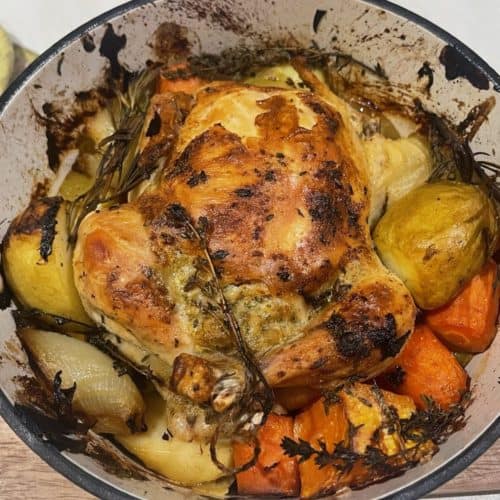
Roast Chicken
Chicken roasted in a Dutch oven over a bed of onions, carrots, potato and sweet potato, this roast chicken comes out with tender, well-seasoned meat and shatter-crisp skin a proper Sunday dinner from one pot.
Equipment
- Large Dutch oven with a lid Big enough to comfortably hold a 4kg chicken
- Large glass bowl For brining, big enough to submerge the chicken
- Kitchen string For trussing the legs, optional but helpful
- Meat thermometer
- Tongs and a sharp carving knife
Ingredients
- 1 whole chicken approximately 3g
- 1 lemon juiced
- A generous handful of fresh thyme sprigs
- A generous handful of fresh rosemary sprigs
- 1 tablespoon bicarbonate of soda
- Cold water enough to fully submerge the chicken
- 2 tablespoons garlic salt
- 3 –4 whole onions skin on, halved
- 4 –5 carrots peeled and cut into large chunks
- 4-6 potatoes peeled and cut in half
- 2 –3 sweet potatoes peeled and cut into large chunks
- Extra fresh thyme and rosemary sprigs for stuffing under the skin
- 1 tablespoon olive oil
- 1 tablespoon butter melted
Instructions
- In a glass bowl large enough to hold the chicken, combine the lemon juice, thyme, rosemary, and bicarbonate of soda with enough cold water to fully submerge the bird. Lower the chicken in, cover, and refrigerate overnight.
- The next day, remove the chicken from the brine and pat it completely dry, inside and out, with paper towel. Rub the skin lightly and evenly with the garlic salt. Place the chicken uncovered on a tray in the fridge, breast-side up, for 2 hours. This step draws moisture out of the skin, which is what allows it to crisp so well in the oven don't skip it if you can help it.
- Preheat your oven to 200°C (180°C fan) / 400°F. Line the base of the Dutch oven with the halved onions, cut-side down, so they form a natural bed. Tuck the fresh thyme and rosemary sprigs under the skin of the chicken breast for extra flavour as it roasts.
- Sit the chicken on top of the onions and arrange the carrots, potato and sweet potato around it. Drizzle the olive oil evenly over the vegetables. Cover with the lid.
- Roast covered for 45 minutes. Remove the lid and continue roasting uncovered for a further 20 minutes for a 3kg bird, until the skin is deep golden and the juices run clear. For chickens heavier than 3kg, add an extra 12–15 minutes uncovered for every additional 500g. The chicken is done when a thermometer inserted into the thickest part of the thigh reads 74°C (165°F).
- Remove the chicken from the Dutch oven and pour the melted butter evenly over the chicken and vegetables. Rest loosely tented with foil for 15–20 minutes before carving. This keeps all those brined, herby juices where they belong in the meat, not on the carving board.