
How Long to Adapt to the Carnivore Diet
Starting the carnivore diet often comes with one big, lingering question: how long does it take to adapt? Some people feel better within days, while others hit a stretch of fatigue, digestion changes, or cravings that make them wonder if they’re doing something wrong. The truth is, adaptation on the carnivore diet isn’t instant and it isn’t the same for everyone.
When you remove carbohydrates and rely almost entirely on animal foods, your body has to relearn how to fuel itself, regulate hunger, and manage electrolytes. That process takes time. Feeling “off” in the early stages doesn’t mean the diet isn’t working; it usually means your metabolism is adjusting. Understanding what’s normal and what might require a small adjustment can make the difference between pushing through confidently and quitting too soon.
In this article, we’ll walk through how long it typically takes to adapt to the carnivore diet, what you may experience at each stage, and the key factors that influence your personal timeline. Whether you’re brand new or a few weeks in and questioning everything, this guide will help you know what to expect and how to support your body through the transition.
What “Adaptation” Really Means on the Carnivore Diet
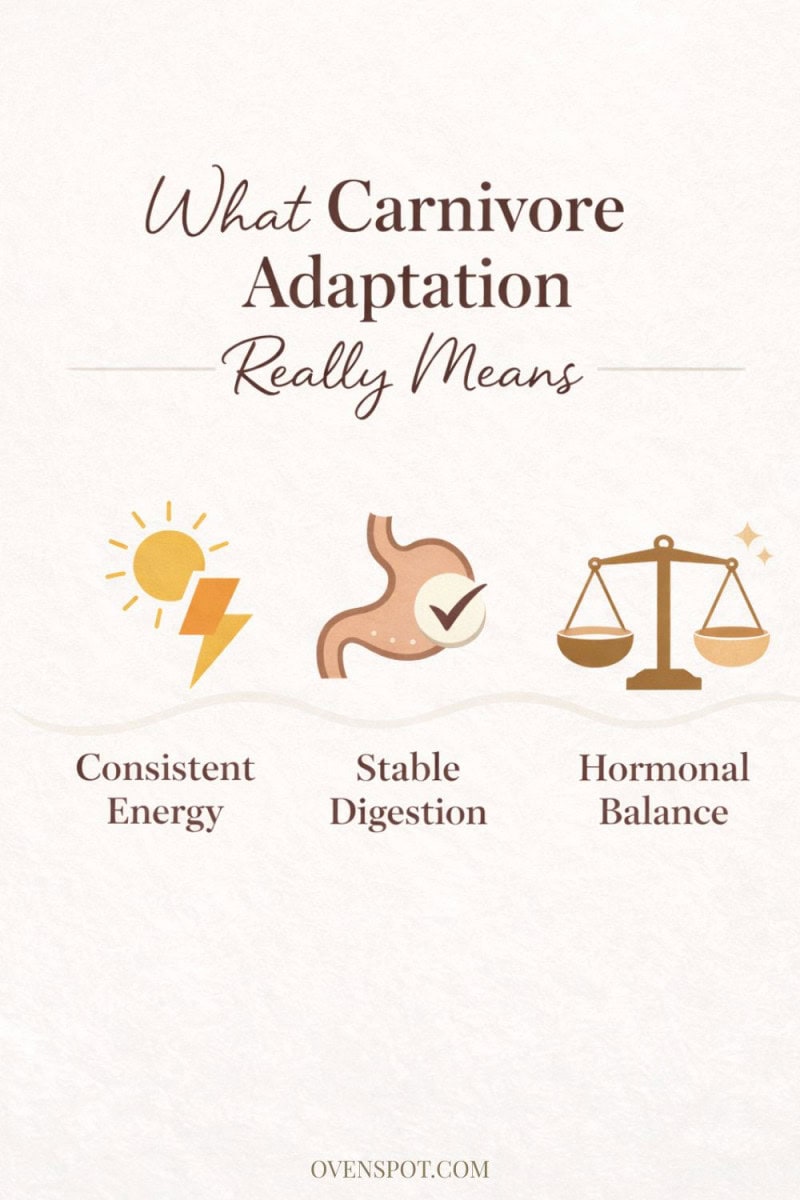
When people talk about “adapting” to the carnivore diet (Affiliate), they usually mean more than just getting through the first few tough days. Adaptation is the period where your body learns how to function without carbohydrates and starts relying on fat and protein as its main fuel source.
Your metabolism is learning a new fuel system.
If you’ve eaten carbs most of your life, your body is used to running on glucose. On carnivore, insulin drops and your body shifts toward burning fat and ketones instead. During this time, energy levels can feel up and down that’s normal while your body figures things out.
Your digestion is adjusting to animal-based foods only.
Removing fiber and plant foods changes how digestion works. You might notice looser stools, less frequent bowel movements, or some discomfort early on. In most cases, this isn’t a problem it’s your digestive system adjusting to a simpler, meat-focused way of eating.
Your electrolyte balance changes quickly.
As insulin levels fall, your body releases more water and sodium. This is why people often experience headaches, fatigue, or dizziness in the early stages. These symptoms are often linked to low electrolytes, not the carnivore diet itself.
Your hunger signals may feel unfamiliar at first.
You may not feel hungry at regular meal times, or you might feel very hungry one day and not much the next. This is part of hormonal adjustment. Over time, appetite usually becomes more stable and intuitive.
In short, adapting to the carnivore diet means your body is resetting how it fuels itself, digests food, manages fluids, and signals hunger. It’s a gradual process not a straight line but once adaptation settles in, many people notice steadier energy, calmer digestion, and a more natural relationship with food.
Typical Carnivore Diet Adaptation Timeline
Days 1–7: The Initial Transition
The first week on the carnivore diet is often the most noticeable and sometimes the most uncomfortable. This is when your body begins switching from running on carbohydrates to relying on fat and protein for fuel. For many people, this stage feels very different from how they’ve eaten before, and that alone can be unsettling.
What you may experience during days 1–7:
- Low or uneven energy
Fatigue, heaviness, or feeling “flat” is common as your body adjusts to a new fuel source. - Headaches or brain fog
These are often tied to electrolyte loss, especially sodium, rather than a lack of food. - Digestive changes
Loose stools, constipation, or reduced bowel movements can happen as your gut adapts to animal-based foods only. - Strong cravings
Sugar and carb cravings can show up unexpectedly, even if you weren’t a big sugar eater before. - Increased thirst or dry mouth
Lower insulin causes more water and sodium loss, which can make you feel dehydrated. - Emotional ups and downs
Mood swings, irritability, or feeling overwhelmed are common and often temporary.
What’s important to know:
Feeling off during this stage does not mean the carnivore diet isn’t working for you. This phase is largely about depletion your body is emptying stored glucose and learning how to access fat for energy. Most symptoms in this first week are normal and tend to ease with proper hydration, salt intake, and adequate food.
Helpful focus for this stage:
Eat enough, salt your food generously, keep meals simple, and avoid judging the diet too quickly. The goal of the first week isn’t perfection it’s giving your body space to begin adapting.
Weeks 2–3: The Adjustment Phase
By weeks two and three, the initial shock of removing carbohydrates has usually passed, but your body is still very much in adjustment mode. This phase can feel confusing because some symptoms improve while others seem to come and go without much warning. Many people assume something is wrong at this point, but this stage is a very normal part of adapting to the carnivore diet.
What you may experience during weeks 2–3:
- Energy that comes and goes
You might have moments of feeling great followed by sudden fatigue. This is common as your body continues learning to use fat more efficiently. - Digestion starting to settle but not perfect yet
Bowel movements may become more predictable, though occasional loose stools or constipation can still happen. - Reduced carb and sugar cravings
Cravings often fade during this phase, even if appetite itself still feels inconsistent. - Unpredictable hunger
Some days you may feel very hungry, while other days you may forget to eat until later. This is part of appetite hormones recalibrating. - Mental clarity in short bursts
Many people notice moments of better focus or calm, even if it doesn’t last all day yet. - Scale changes (or no change at all)
Weight may fluctuate, stall, or shift unexpectedly. This doesn’t reflect fat loss or gain accurately at this stage.
What’s important to know:
Weeks 2–3 are often when people quit not because carnivore isn’t working, but because expectations don’t match reality. You’re past the “detox” phase, but not fully adapted yet. Progress during this stage is rarely linear.
Helpful focus for this stage:
Continue prioritizing salt and hydration, eat enough fat, and resist the urge to over-restrict or force fasting. Keeping meals simple and consistent helps your body finish adjusting.
Weeks 4–6: Early Stabilization

By weeks four to six, many people begin to feel more “normal” again sometimes even better than before starting the carnivore diet. While full adaptation can still take longer, this stage is often where early stability starts to appear and confidence begins to build.
What you may experience during weeks 4–6:
- More consistent energy
Energy levels tend to smooth out, with fewer crashes throughout the day. You may notice you can go longer between meals without feeling shaky or drained. - Calmer digestion
For many, bowel habits become more predictable. Digestive discomfort usually decreases as the body becomes more efficient at digesting meat and fat. - Clearer hunger signals
Hunger often feels simpler and more physical rather than driven by cravings or emotions. You may naturally eat fewer meals without trying to restrict. - Improved mental clarity
Brain fog often lifts, and focus feels steadier. Some people describe a calmer, more even mental state. - Changes in body composition
Weight loss may slow, stabilize, or become less dramatic. Clothing fit and body measurements often become better indicators than the scale.
What’s important to know:
Even though things feel more stable, this doesn’t mean adaptation is complete. Small ups and downs can still happen, especially with stress, sleep changes, or inconsistent electrolyte intake.
Helpful focus for this stage:
Listen to your hunger cues, continue salting food to taste, and avoid adding unnecessary complexity. This is a good time to gently return to normal activity levels while continuing to let your body adapt at its own pace.
How to Tell If You’re On Track
It’s common to wonder whether the carnivore diet is “working,” especially when progress feels slow or uneven. Instead of focusing on a strict timeline, these checkpoints can help you gauge whether your body is adapting in the right direction — even if you’re not fully adapted yet.
Signs you’re likely on track:
- Energy is improving overall: You may still have off days, but you’re not constantly exhausted or crashing between meals.
- Hunger feels more natural: You get physically hungry rather than craving food out of habit, stress, or boredom.
- Cravings are reduced: Thoughts about sugar or carbs are quieter or easier to dismiss, even if they pop up occasionally.
- Digestion is trending calmer: Bowel habits are becoming more predictable, or digestive discomfort is less intense than in the early weeks.
- Mental clarity comes more often: Focus, calmness, or a sense of “mental quiet” appears more frequently, even if it’s not constant yet.
- You recover better from meals: You feel satisfied after eating instead of bloated, foggy, or overly tired.
Signs you may need a small adjustment (not a reset):
- Persistent fatigue that doesn’t improve week to week
- Dizziness, headaches, or weakness despite eating enough
- Ongoing digestive distress that isn’t easing
- Constant hunger or loss of appetite for extended periods
These usually point to electrolyte issues, under-eating, not enough fat, or too much stress, rather than a failure of the diet itself.
The big picture: If your symptoms are gradually improving — even slowly — you’re likely on the right path. Carnivore adaptation isn’t linear, and steady progress matters far more than hitting a specific milestone by a certain week.
3–6 Months: Full Adaptation (For Many, Not All)

By the three- to six-month mark, a lot of people reach what feels like their “new normal” on carnivore. This is when the diet often becomes easier to maintain because your body isn’t just coping without carbs it’s functioning confidently without them.
What you may experience during months 3–6:
- Consistent, dependable energy
Most days feel steady without the highs and lows that used to drive snacking, cravings, or afternoon crashes. - Stronger appetite regulation
Hunger becomes clear and simple. You naturally eat when you need food and stop when you’re satisfied without constantly thinking about your next meal. - Better workout performance and recovery
Strength, endurance, and recovery often improve as your body becomes efficient at using fat for fuel and rebuilding with protein. - More stable digestion and fewer “random” symptoms
Digestive patterns tend to be predictable, and issues that lingered early on often fade or become easier to pinpoint and adjust. - Food tolerance patterns become obvious
People often learn what makes them feel their best for example, whether they do better with more fat, leaner meals, dairy or no dairy, eggs or no eggs. - Ongoing improvements that are subtle but meaningful
Many benefits at this stage aren’t dramatic they’re more like “quiet wins”: calmer mood, steadier sleep, less inflammation for some, and fewer cravings or compulsions.
What’s important to know:
Not everyone fully adapts in the same timeframe. If you’re coming from years of metabolic issues, chronic stress, gut problems, or long-term dieting, your body may take longer and that doesn’t mean you’re failing. It just means your system needs more time to rebuild stability.
Helpful focus for this stage:
Keep your approach simple, pay attention to what makes you feel best, and avoid chasing perfection. This is the stage where small tweaks (like fat level, meal timing, or removing a trigger food like dairy) can make a noticeable difference without overhauling everything.
Factors That Affect How Long Carnivore Adaptation Takes
While many people follow a similar adaptation pattern, no two timelines are exactly the same. How quickly (or slowly) you adapt to the carnivore diet depends on several underlying factors most of which have nothing to do with willpower or discipline.
Here are the biggest influences on your personal adaptation timeline:
Your previous diet
If you were eating a standard high-carb diet, adaptation often takes longer than for someone coming from keto or low-carb. The bigger the shift, the more adjustment your body needs.
Metabolic health and insulin resistance
People with blood sugar issues, insulin resistance, or long-term metabolic stress may experience a longer transition as the body relearns how to regulate energy efficiently.
Digestive history
Past gut issues, gallbladder problems, low stomach acid, or years of restrictive dieting can affect how quickly digestion adapts to higher fat and protein intake.
Electrolyte intake (especially sodium)
Undersalting food is one of the most common reasons adaptation feels harder than it needs to be. Low sodium can slow progress and intensify symptoms at every stage.
Stress and sleep quality
High stress and poor sleep raise cortisol, which can interfere with energy levels, digestion, and appetite regulation even on a perfect diet.
Activity level and exercise intensity
Heavy training or intense workouts too early can drain energy and delay adaptation. Many people do better scaling activity down temporarily.
Calorie and fat intake
Undereating or staying too lean can keep your body in a constant stress response, making adaptation feel stalled or uncomfortable.
Consistency over perfection
Frequent changes, experimentation, or “resetting” the diet can slow adaptation. Simpler and more consistent eating often leads to faster progress.
Takeaway:
If your adaptation feels slower than someone else’s, it doesn’t mean carnivore isn’t right for you. It usually means your body is working through its own backlog and steady support matters more than speed.
Common Symptoms During Carnivore Adaptation
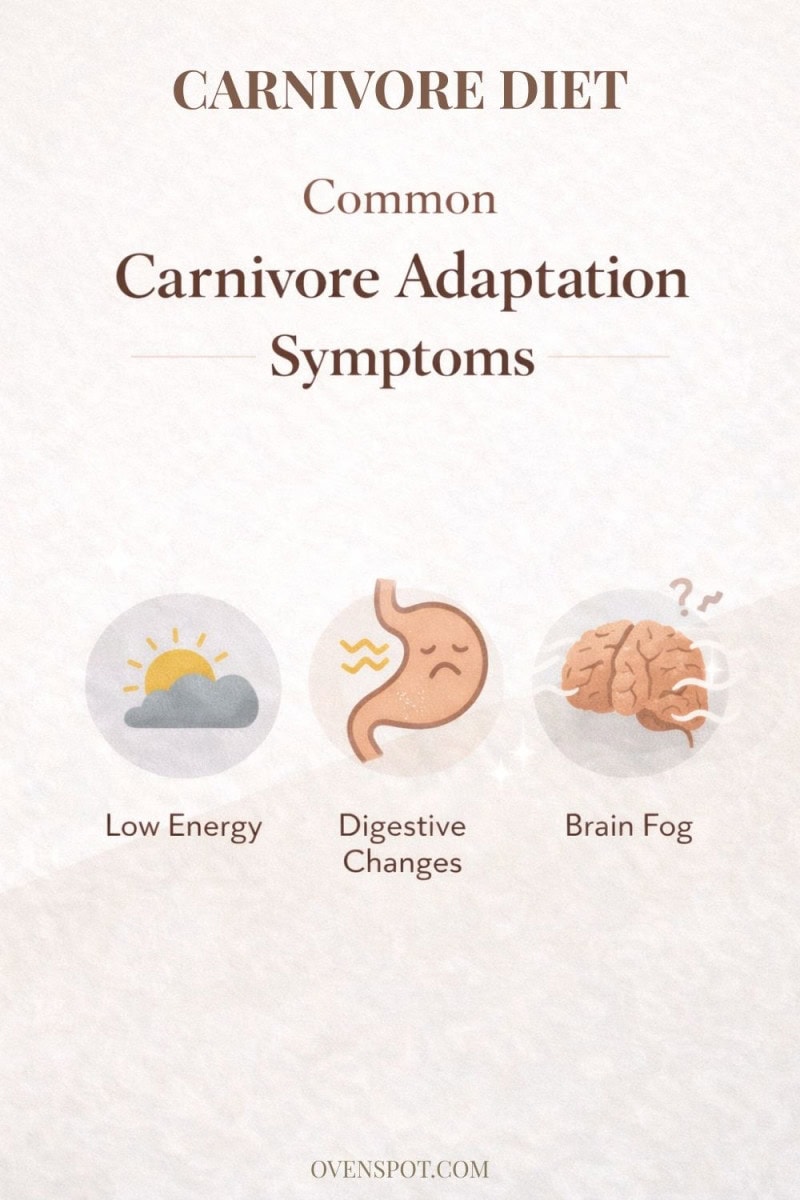
As your body adjusts to the carnivore diet, it’s normal to experience a range of symptoms especially in the first few weeks. These symptoms can feel uncomfortable or even concerning, but in many cases they’re part of your body recalibrating how it fuels itself, digests food, and manages electrolytes.
Below are some of the most common experiences people report during carnivore adaptation.
Fatigue or low energy
Feeling tired, heavy, or unmotivated is common early on. This often happens while your body is learning to access fat for fuel and can be made worse by low electrolyte intake or undereating.
Headaches and brain fog
These are frequently linked to sodium loss as insulin levels drop. They’re often relieved by increasing salt and staying well hydrated.
Digestive changes
Loose stools, constipation, bloating, or reduced bowel movements can occur as your gut adapts to a meat-only intake. For most people, digestion settles with time and consistency.
Cravings for carbs or sugar
Even if you weren’t a big sugar eater before, cravings can show up unexpectedly. These usually fade as your appetite hormones rebalance and blood sugar stabilizes.
Dizziness or lightheadedness
This is often related to low sodium, low blood volume, or standing up too quickly. It’s a common but fixable issue during adaptation.
Sleep disturbances
Some people experience trouble falling asleep or staying asleep in the early weeks. This often improves as cortisol and blood sugar regulation stabilize.
Mood changes or irritability
Emotional ups and downs can happen as your body adjusts hormonally. This doesn’t mean carnivore is affecting your mental health long-term it’s usually temporary.
Temporary weight changes
Rapid weight loss, short-term weight gain, or plateaus are all possible. These shifts often reflect water balance and metabolic changes rather than fat gain or loss.
Muscle cramps or weakness
Low electrolytes especially sodium, potassium, or magnesium are common causes, particularly if salt intake isn’t increased.
Important reminder:
Experiencing symptoms doesn’t mean the carnivore diet is harming you. What matters most is whether symptoms are gradually improving rather than worsening over time.
What’s Normal vs When to Adjust
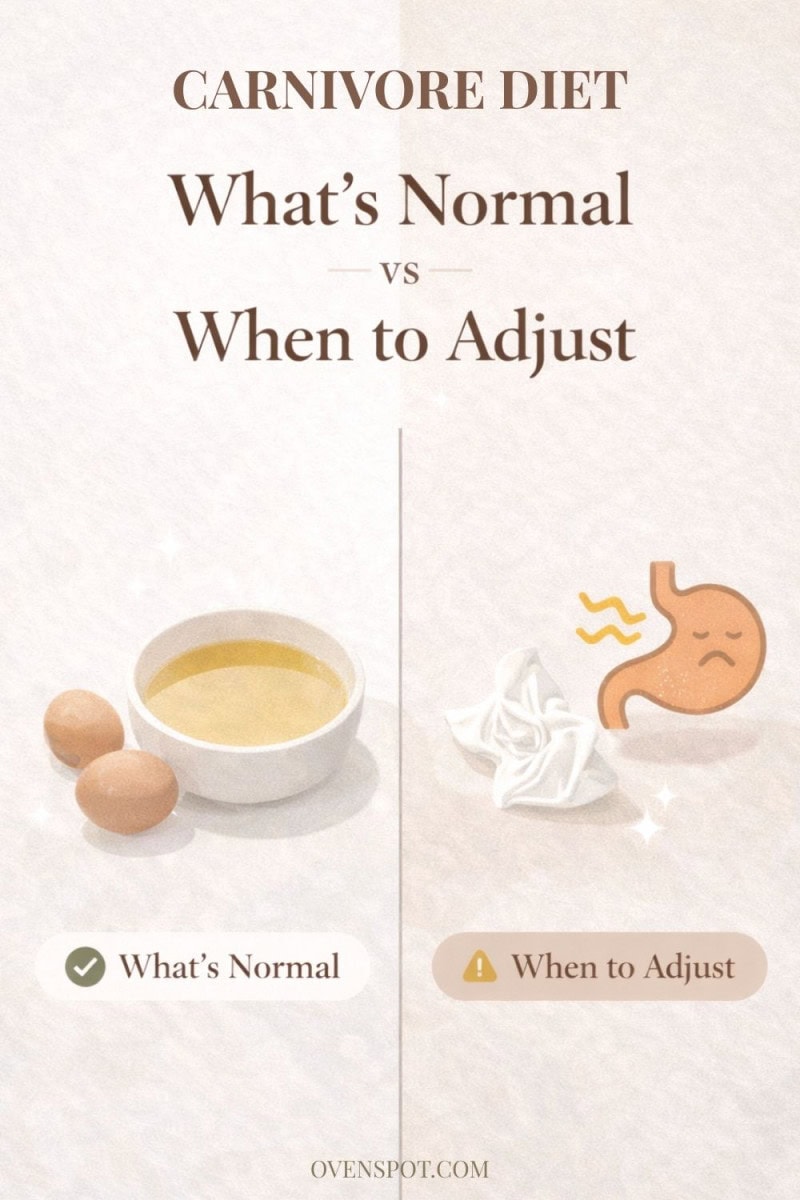
One of the hardest parts of the carnivore diet is knowing whether what you’re feeling is a normal part of adaptation or a sign that something needs tweaking. The key difference is whether symptoms are temporary and improving or persistent and worsening.
What’s Usually Normal During Adaptation
These experiences are common, especially in the first few weeks, and often resolve with time, food, and electrolytes:
- Fatigue or low energy that slowly improves
- Digestive changes that become less intense week by week
- Fluctuating hunger or appetite
- Mild headaches that respond to salt and hydration
- Occasional cravings for carbs or sugar
- Weight fluctuations (up or down) that settle over time
If symptoms are easing overall, even if they’re not gone yet, that’s typically a sign your body is adapting.
When It’s Time to Adjust (Not Quit)
You may need a small adjustment if symptoms are stuck, intensifying, or interfering with daily life, such as:
- Ongoing dizziness, weakness, or fatigue that doesn’t improve
- Persistent headaches despite adequate salt
- Digestive distress that remains severe or worsening
- Constant hunger or complete loss of appetite for extended periods
- Feeling worse week after week instead of better
These signals usually point to fixable issues, not a failed diet.
Common Adjustments That Help
- Increase salt intake (this is the most common fix)
- Eat more food overall, especially fat
- Stop forcing fasting during adaptation
- Reduce exercise intensity temporarily
- Simplify meals instead of adding more variety
Small changes often make a big difference especially with electrolytes and total intake.
The Bottom Line
Adaptation isn’t about pushing through misery. Some discomfort is normal, but suffering isn’t required. If symptoms are improving, patience is usually the best move. If they’re not, adjusting your approach is a smart and supportive step not a setback.
How to Support a Smoother Carnivore Adaptation
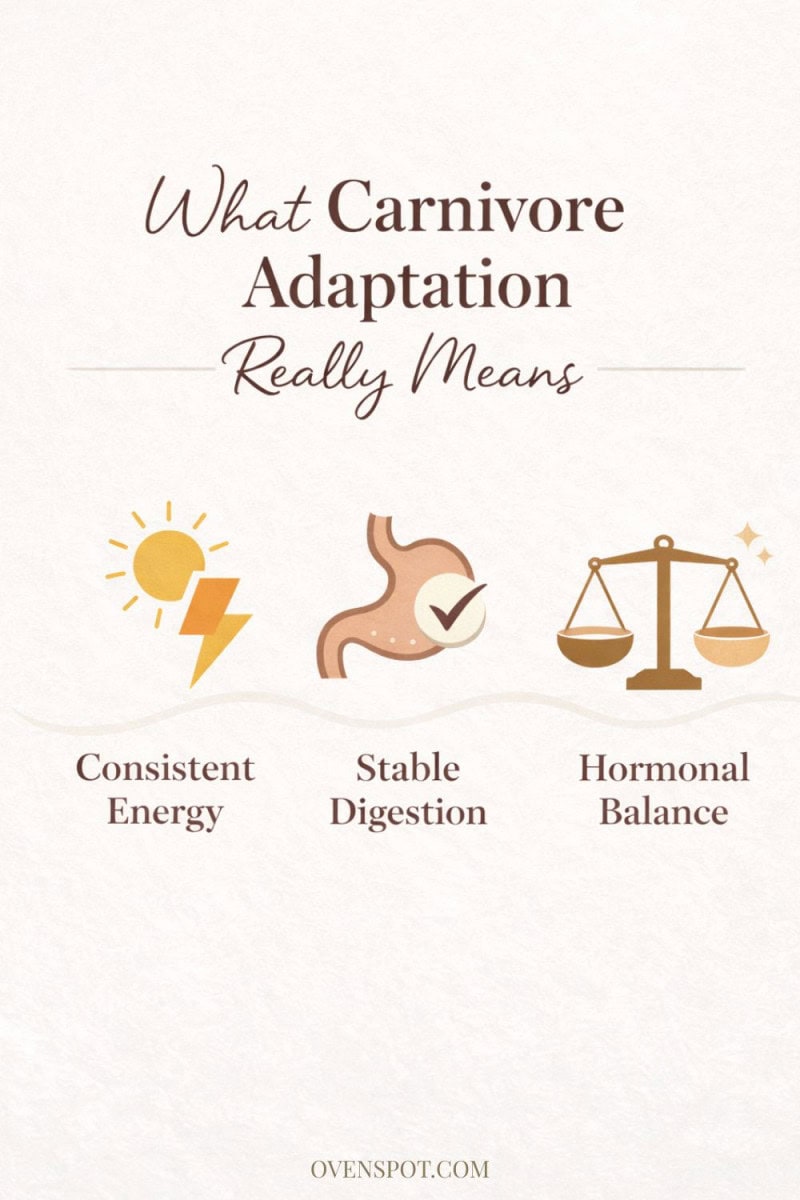
While some ups and downs are unavoidable, there’s a lot you can do to make the adaptation process gentler and more manageable. Most struggles people experience on carnivore aren’t caused by the diet itself they’re caused by under-supporting the transition.
Here’s how to give your body what it needs while it adapts.
Prioritize electrolytes (especially salt)
Lower insulin causes your body to lose sodium and water quickly. Salt your food generously and don’t be afraid to add extra sodium, especially in the first few weeks. Many symptoms improve almost immediately with adequate salt.
Eat enough — don’t undereat
It’s common to lose appetite early on, but consistently eating too little can stall adaptation and increase fatigue, dizziness, and cravings. Focus on eating to satiety, even if meals feel repetitive.
Don’t fear fat
Fat is your primary energy source on carnivore. Going too lean can leave you feeling weak, hungry, or irritable. Adjust fat intake until energy feels stable between meals.
Avoid forcing fasting early
Even if fasting worked well for you before, it can backfire during adaptation. Let fasting happen naturally later, once hunger signals stabilize.
Keep meals simple and consistent
Simple meals (like meat, salt, and water) reduce digestive stress and make it easier for your body to adapt. This isn’t the time for constant experimentation.
Scale back intense exercise temporarily
High-intensity workouts can increase fatigue and slow adaptation. Gentle movement like walking is usually better during the early stages.
Support sleep and stress management
Poor sleep and high stress raise cortisol, which can worsen energy swings, digestion, and appetite. Prioritize rest it directly affects adaptation speed.
Be patient with the process
Adaptation isn’t linear. Some days will feel great, others won’t. What matters most is the overall trend, not daily perfection.
Takeaway:
The smoother your adaptation feels, the more likely you’re supporting your body properly. When symptoms ease with small changes, that’s a sign you’re moving in the right direction even if you’re not fully adapted yet.
Mistakes That Slow Carnivore Adaptation
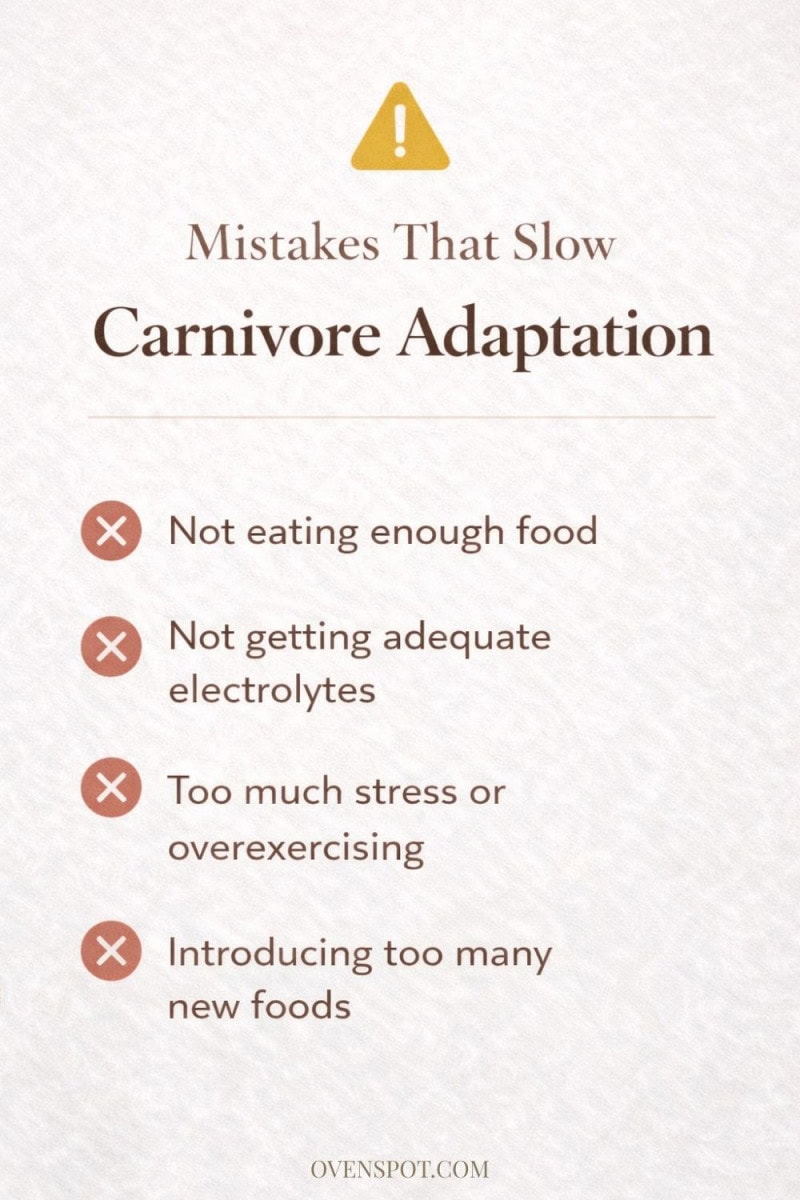
Many people struggle on the carnivore diet not because it isn’t right for them, but because a few common mistakes make adaptation harder than it needs to be. These missteps can prolong symptoms, increase frustration, and make the process feel far more difficult than it should.
Undereating (even unintentionally)
Loss of appetite is common early on, but consistently eating too little can lead to fatigue, dizziness, cravings, and stalled adaptation. Your body needs enough food and enough fat to feel safe switching fuel sources.
Fear of fat
Going too lean is one of the fastest ways to feel miserable on carnivore. Fat provides the majority of your energy. If meals leave you hungry soon after eating or feeling weak, fat intake is often the issue.
Not getting enough salt
Low sodium is responsible for many early carnivore symptoms. Headaches, fatigue, lightheadedness, and muscle cramps are often electrolyte-related, not a sign the diet isn’t working.
Forcing fasting too early
Trying to fast before your body is adapted can increase stress and worsen symptoms. Fasting works best once hunger signals are stable not during the adjustment phase.
Overtraining or pushing intense exercise
Hard workouts too soon can drain energy and slow adaptation. Many people do better reducing intensity temporarily and focusing on gentle movement.
Changing too many variables at once
Constantly adding or removing foods, supplements, or rules makes it harder to know what’s helping or hurting. Simplicity speeds adaptation.
Comparing your progress to others
Online timelines can create unrealistic expectations. Someone else’s 7-day success story doesn’t reflect your history, health, or stress load.
Quitting too early
Weeks two and three are often the hardest mentally. Many people stop just before things begin to stabilize.
Bottom line:
Adaptation requires support, not pressure. Avoiding these common mistakes can dramatically improve how you feel and shorten the adjustment period without needing to overhaul the diet itself.
How You’ll Know You’re Fully Adapted

Full adaptation to the carnivore diet doesn’t usually arrive with a dramatic “aha” moment. Instead, it shows up quietly through consistency, ease, and a sense that eating this way no longer feels like work.
Here are some of the clearest signs your body has adapted.
Stable energy without effort
You have steady energy throughout the day without relying on snacks, caffeine, or strict meal timing. Long gaps between meals feel comfortable rather than stressful.
Clear, predictable hunger cues
Hunger feels physical and calm, not urgent or emotional. You eat when you’re hungry, stop when you’re satisfied, and don’t think much about food in between.
Digestion feels settled
Bowel habits are predictable for you, with minimal discomfort or surprise symptoms. Digestive issues that showed up early on are largely resolved.
Minimal cravings
Thoughts about sugar or carbs are rare or easy to ignore. Food no longer feels mentally noisy or tempting in the way it once did.
Mental clarity and emotional steadiness
Focus feels sharper and more consistent. Mood swings, irritability, or food-related anxiety are reduced or gone.
Physical resilience improves
Workouts, daily movement, or long days feel easier to recover from. Your body feels more resilient rather than easily depleted.
You’ve learned what works for you
You know how much fat you need, which foods make you feel best, and how to adjust without overthinking. The diet feels personalized, not rigid.
The biggest sign of all:
You’re no longer constantly evaluating whether the carnivore diet is “working.” It simply feels normal, sustainable, and supportive of your health.
Full adaptation isn’t about perfection it’s about ease. When your body feels fueled, calm, and reliable day to day, you’re likely there.
Final Thoughts: Trust the Process, Listen to Feedback
Adapting to the carnivore diet isn’t about pushing through discomfort or following a rigid timeline. It’s about giving your body the time and support it needs to learn a new way of fueling itself. Some changes happen quickly, while others unfold slowly and quietly in the background.
What matters most is the overall direction. If symptoms are easing, energy is becoming more stable, and food feels simpler rather than stressful, you’re moving in the right direction even if progress isn’t perfectly linear. Temporary setbacks don’t mean failure; they’re often just feedback that something small needs adjusting.
Listening to your body, staying consistent, and avoiding unnecessary pressure can make a huge difference in how this transition feels. Trust the process, make thoughtful adjustments when needed, and remember that adaptation is personal. When you work with your body instead of against it, the carnivore diet has a much better chance of becoming sustainable, supportive, and truly beneficial long term.
Carnivore Diet Guides
Check out more information about a meat based or carnivore diet!

Michelle
Hi, I’m Michelle, the founder, owner, author, and editor of OvenSpot. My passion for one-pot cooking commenced when I was working to prepare cafeteria lunches for school students. I am now on a mission to assist you in choosing the cooking pot or appliance you will use daily. As well as in-depth information to assist you in using and caring for your cookware and appliances. Along with the yummy recipes I use at home.
Questions? Reach out to Michelle at [email protected]