
Chicken Mince Chow Mein: Better Than Takeout
If you’ve been ordering chow mein because homemade always turns out either bland or soggy, this recipe fixes both problems. It uses chicken mince instead of sliced chicken breast, which means no marinating, no slicing, and dinner on the table in about 30 minutes.
Chicken mince cooks fast and picks up sauce well, so every bite gets that same savoury, slightly sweet flavour you’d get from a takeout container without the delivery fee or the 40-minute wait.
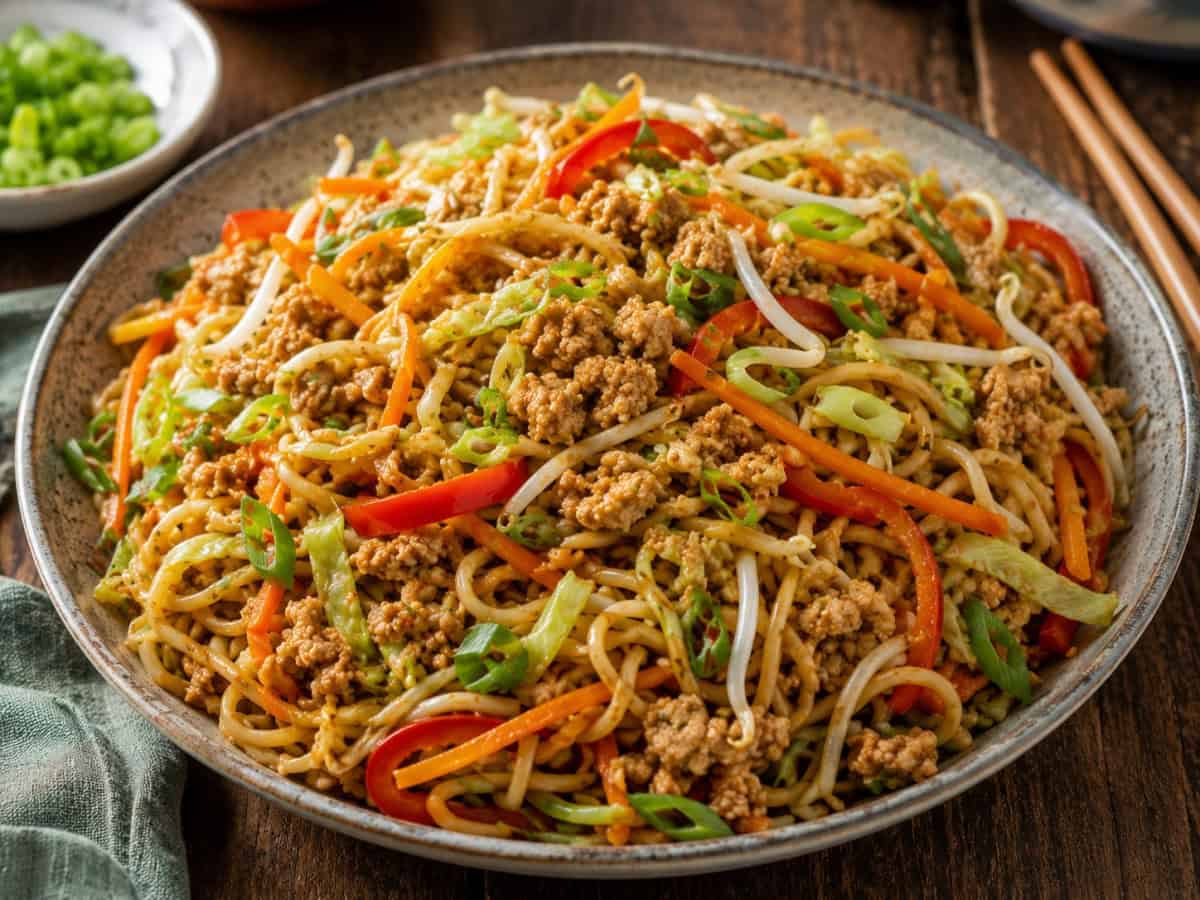
Why You’ll Love This Chicken Chow Mein
This is a genuine 30-minute dinner, not a recipe that claims 30 minutes and quietly leaves out the chopping time. Using mince instead of chicken breast cuts out the two steps that usually slow chow mein down: slicing the chicken thin and cooking it in batches so it doesn’t steam.
Chow mein itself dates back to Chinese immigrant communities in the US in the early 1900s, and it’s stayed a takeout menu staple ever since stir-fried noodles, protein, and vegetables in a soy-based sauce. This version keeps that formula but makes it fast enough for a Tuesday night.
It’s also a good one for using up whatever vegetables are sitting in the crisper drawer. Cabbage, carrot, and capsicum are the base here, but chow mein is forgiving swap in what you have.
Simple Ingredients
- Chicken mince: The whole point of this recipe. It cooks in under 5 minutes, breaks apart easily so it distributes through the noodles instead of sitting in clumps, and soaks up the sauce as it cooks.
- Garlic and ginger: The aromatic base of the sauce. Both go in early so they can cook into the oil rather than sitting raw on top.
- Brown onion: Adds sweetness and bulk once it softens in the pan.
- Carrot: Sliced into thin matchsticks so it cooks quickly and keeps a bit of bite.
- Capsicum (bell pepper): Adds colour and a slight crunch that holds up against the sauce.
- Cabbage: The classic chow mein vegetable it wilts just enough without going mushy and adds real volume to the dish.
- Bean sprouts: Added right at the end for that fresh, crisp bite chow mein is known for.
- Spring onion: Finishes the dish with sharpness and colour.
- Chow mein noodles (or hokkien noodles): These hold their shape in the wok and don’t turn gluey the way thinner noodles can.
- Soy sauce: The backbone of the sauce salty, savoury, and the main flavour carrier.
- Oyster sauce: Adds depth and a slight sweetness that soy sauce alone doesn’t have.
- Shaoxing wine (or dry sherry): A classic addition in Cantonese cooking that rounds out the sauce. Leave it out if you don’t have it the dish will still work.
- Sesame oil: A small amount goes a long way, adding a toasted, nutty background note.
- Brown sugar: Balances the saltiness of the soy and oyster sauce.
- Chicken stock: Loosens the sauce so it coats the noodles instead of clumping.
- Cornflour: Thickens the sauce just enough to cling to every strand of noodle.
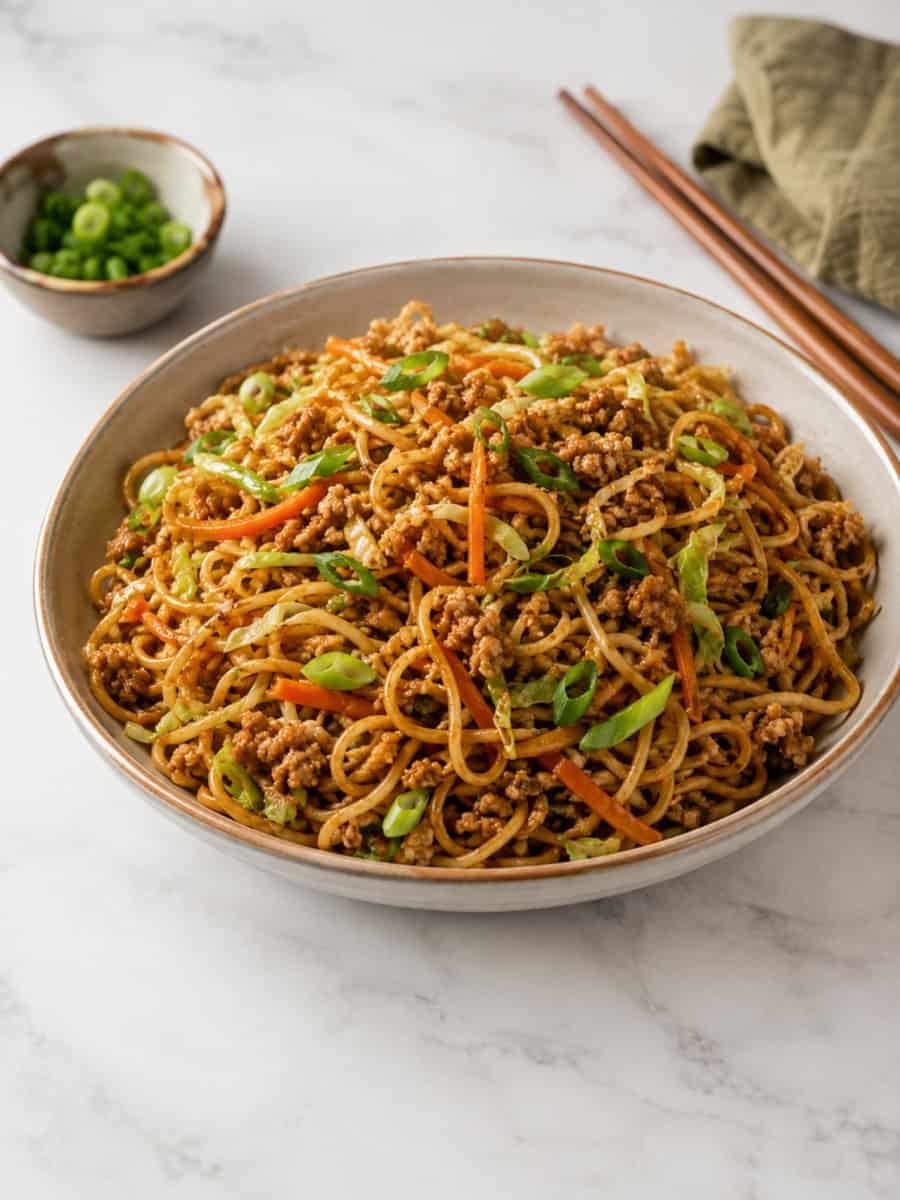
Recipe Details
- Servings: 4
- Preparation time: 15 minutes
- Cook time: 15 minutes
- Total time: 30 minutes
Recommended Equipment
- Wok or large deep skillet
- Wooden spoon or spatula
- Small mixing bowl (for sauce)
- Sharp knife and chopping board
- Colander (for draining noodles)
What Is Needed
For the chow mein:
- 500g chicken mince
- 2 tablespoons vegetable oil, divided
- 3 cloves garlic, minced
- 1 teaspoon grated ginger
- 1 brown onion, sliced
- 2 carrots, cut into thin matchsticks
- 1 red capsicum, sliced
- 3 cups shredded cabbage
- 1 cup bean sprouts
- 3 spring onions, sliced (plus extra to serve)
- 375g chow mein or hokkien noodles
For the sauce:
- 3 tablespoons soy sauce
- 1 tablespoon oyster sauce
- 1 tablespoon Shaoxing wine (optional)
- 1 teaspoon sesame oil
- 1 teaspoon brown sugar
- 1/2 cup chicken stock
- 1 tablespoon cornflour mixed with 2 tablespoons water
- White pepper, to taste
How to Make Chicken Chow Mein
Prep the Noodles
Cook the noodles according to the packet instructions, then drain and set aside. If using fresh hokkien noodles, loosen them under warm water first so they separate easily in the wok.
Make the Sauce
In a small bowl, whisk together the soy sauce, oyster sauce, Shaoxing wine, sesame oil, brown sugar, and chicken stock. Set aside you’ll add the cornflour slurry separately at the end.
Cook the Chicken Mince
Heat 1 tablespoon of oil in a wok or large skillet over high heat. Add the chicken mince and cook, breaking it up with a spoon, for 4–5 minutes until browned and cooked through. Add the garlic and ginger in the last minute of cooking so they don’t burn. Remove the mince from the pan and set aside.
Stir-Fry the Vegetables
Add the remaining oil to the same pan. Add the onion and carrot and stir-fry for 2 minutes. Add the capsicum and cabbage and cook for a further 2–3 minutes, until just starting to soften but still with some bite.
Combine
Return the chicken mince to the pan. Add the drained noodles and pour over the sauce. Toss everything together for 1–2 minutes so the noodles heat through and absorb the sauce.
Thicken and Finish
Give the cornflour slurry a quick stir and pour it into the pan. Toss for another minute until the sauce thickens and coats everything evenly. Add the bean sprouts and spring onion and toss through for 30 seconds, just enough to warm them without losing their crunch.
Serve
Serve immediately, topped with extra spring onion. A drizzle of extra soy sauce or chilli oil at the table is a good option for anyone who wants more heat.
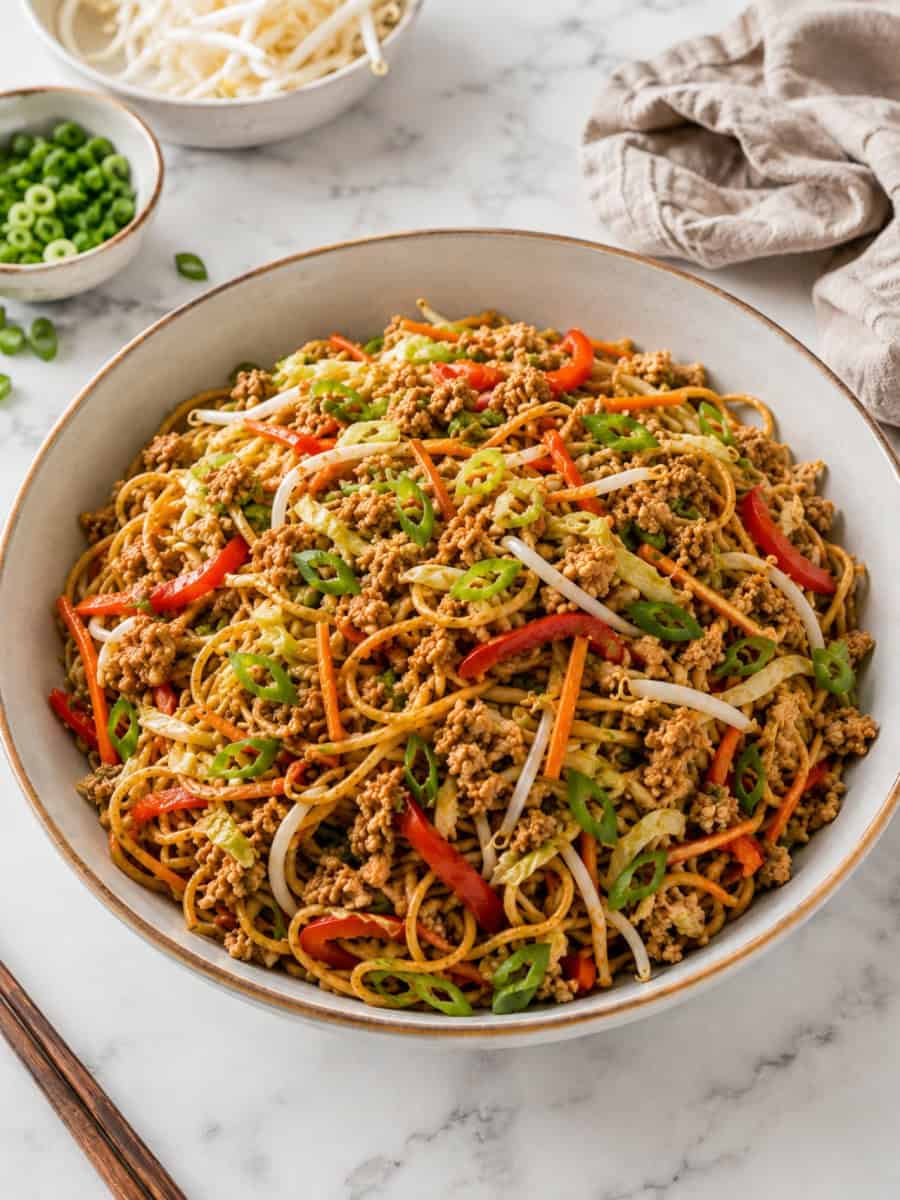
What to Serve With Chicken Chow Mein
- Spring rolls or dumplings
- A simple cucumber salad with rice vinegar
- Steamed dumplings or gyoza
- Prawn crackers
- A light miso or hot and sour soup to start
- Steamed edamame with sea salt
Nutritional Information
Per serving. These are estimates and will vary based on the specific brands used.
- Calories: 420
- Fat: 14g
- Carbohydrates: 48g
- Protein: 28g
Top Tips
Keep the pan hot: Chow mein depends on high heat. A pan that’s not hot enough will steam the ingredients instead of stir-frying them, and you’ll end up with soggy vegetables instead of that slight char and crunch.
Don’t overcook the vegetables: They should still have bite when you plate up. A minute or two too long in the pan and you lose the texture that makes chow mein worth making at home.
Rinse fresh noodles before using: If you’re using fresh hokkien-style noodles, a quick rinse under warm water stops them clumping together in the pack.
Prep everything before you start cooking: Chow mein moves fast once the pan is hot. Have the mince, vegetables, noodles, and sauce all measured and within reach before you turn the heat on.
Make it ahead for the week: Cook the chicken mince and chop the vegetables up to 2 days in advance and store separately in the fridge. This turns the whole recipe into a 15-minute assembly job on a busy night.
Recipe Variations
Beef mince chow mein: Swap the chicken mince for beef mince for a richer, heartier version.
Pork mince chow mein: Pork mince works particularly well with the sweetness in the sauce a common variation in Cantonese-style chow mein.
Vegetarian chow mein: Skip the mince and add extra vegetables, or use crumbled firm tofu in its place.
Spicy chow mein: Add a tablespoon of chilli garlic sauce or a sliced fresh chilli with the garlic and ginger.
Low-carb chow mein: Swap the noodles for shredded cabbage or a spiralised vegetable noodle, and reduce the cornflour slightly since there’s less starch to coat.
Egg chow mein: Push the vegetables to one side of the pan, crack in 2 eggs, scramble, then mix through with everything else.
How to Store and Reheat
Refrigerating: Store in an airtight container in the fridge for up to 3 days.
Freezing: This dish freezes reasonably well, though the vegetables will soften slightly on reheating. Freeze in an airtight container for up to 2 months and thaw overnight in the fridge.
Reheating: Reheat in a hot pan or wok with a splash of water or stock for 3–4 minutes, tossing frequently. This works better than the microwave, which tends to make the noodles gluey. If using the microwave, cover and heat in 30-second bursts, stirring in between.
Craving more takeout classics you can make at home? Try our Panda Express Chow Mein copycat for a side-by-side comparison, or keep the weeknight dinner streak going with our Teriyaki Chicken wraps. Looking for something to round out the week? Our Cold Weather Dinner Ideas roundup and Chicken side dishes for cold winter nights are both built for exactly this kind of quick, comforting meal.
Chicken Chow Mein
Equipment
- Wok or large deep skillet
- Wooden spoon or spatula
- Small mixing bowl for sauce
- Sharp knife and chopping board
- Colander for draining noodles
Ingredients
- 500 g chicken mince
- 2 tablespoons vegetable oil divided
- 3 cloves garlic minced
- 1 teaspoon grated ginger
- 1 brown onion sliced
- 2 carrots cut into thin matchsticks
- 1 red capsicum sliced
- 3 cups shredded cabbage
- 1 cup bean sprouts
- 3 spring onions sliced (plus extra to serve)
- 375 g chow mein or hokkien noodles
- 3 tablespoons soy sauce
- 1 tablespoon oyster sauce
- 1 tablespoon Shaoxing wine optional
- 1 teaspoon sesame oil
- 1 teaspoon brown sugar
- 1/2 cup chicken stock
- 1 tablespoon cornflour mixed with 2 tablespoons water
- White pepper to taste
Instructions
- Cook the noodles according to the packet instructions, then drain and set aside. If using fresh hokkien noodles, loosen them under warm water first so they separate easily in the wok.
- In a small bowl, whisk together the soy sauce, oyster sauce, Shaoxing wine, sesame oil, brown sugar, and chicken stock. Set aside you’ll add the cornflour slurry separately at the end.
- Heat 1 tablespoon of oil in a wok or large skillet over high heat. Add the chicken mince and cook, breaking it up with a spoon, for 4–5 minutes until browned and cooked through. Add the garlic and ginger in the last minute of cooking so they don’t burn. Remove the mince from the pan and set aside.
- Add the remaining oil to the same pan. Add the onion and carrot and stir-fry for 2 minutes. Add the capsicum and cabbage and cook for a further 2–3 minutes, until just starting to soften but still with some bite.
- Return the chicken mince to the pan. Add the drained noodles and pour over the sauce. Toss everything together for 1–2 minutes so the noodles heat through and absorb the sauce.
- Give the cornflour slurry a quick stir and pour it into the pan. Toss for another minute until the sauce thickens and coats everything evenly. Add the bean sprouts and spring onion and toss through for 30 seconds, just enough to warm them without losing their crunch.
- Serve immediately, topped with extra spring onion. A drizzle of extra soy sauce or chilli oil at the table is a good option for anyone who wants more heat.

Michelle
Hi, I’m Michelle, the founder, owner, author, and editor of OvenSpot. My passion for one-pot cooking commenced when I was working to prepare cafeteria lunches for school students. I am now on a mission to assist you in choosing the cooking pot or appliance you will use daily. As well as in-depth information to assist you in using and caring for your cookware and appliances. Along with the yummy recipes I use at home.
Questions? Reach out to Michelle at [email protected]