
Butternut Squash Soup: Roasted for the Best Flavor
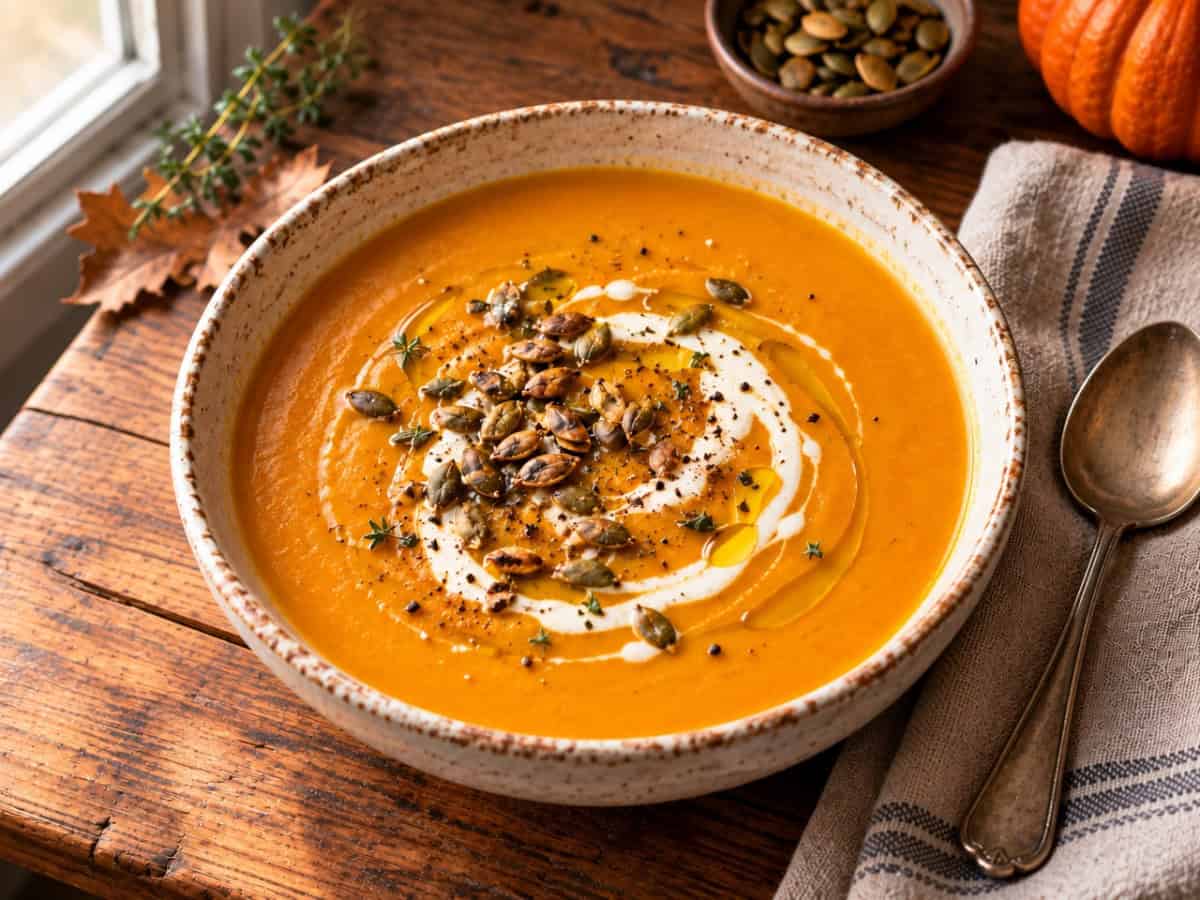
There’s a reason butternut squash soup shows up on so many fall tables. It’s simple, it’s inexpensive, and it turns one unglamorous vegetable into something that tastes like it took a lot more effort than it did. Roast the squash first, blend it with a few pantry staples, and you’ve got an easy butternut squash soup that’s silky enough for company and easy enough for a Tuesday.
It’s not a fussy recipe. Roasting does most of the work for you, and from there it’s really just simmer, blend, and taste the kind of dependable dinner that suits a quiet weeknight as easily as it does a table full of people once the weather turns.
Why You’ll Love This Roasted Butternut Squash Soup
Most butternut squash soup recipes ask you to peel and cube a raw squash, which is the part most people dread. This one skips it. Roast the squash cut-side-down until it’s soft, and the flesh scoops right out of the skin no peeler required.
Roasting first is also what gives you a genuinely creamy butternut squash soup, even without much cream. The dry heat caramelizes the squash’s natural sugars, so the base is already rich and a little sweet before you’ve added anything else. A splash of coconut milk or cream at the end rounds it out, but it’s doing far less work than the roasting is.
It’s a naturally flexible base, too. Keep it simple and it’s a good weeknight dinner. Add curry powder and it’s a curried butternut squash soup with real depth. Swap in coconut milk and it’s dairy-free and vegan without changing the method at all.
Simple Ingredients
Butternut squash: The whole point of the recipe roasting it whole (well, halved) keeps it from drying out and gives you that deep, caramelized flavor a raw-and-boiled squash just doesn’t get to.
Onion and garlic: The aromatic base that keeps the soup from tasting one-note. Cooked low and slow until soft, they add savory depth underneath all that sweetness.
Vegetable or chicken broth: Thins the roasted squash into a proper soup consistency. Vegetable broth keeps things vegan; chicken broth adds a little extra savoriness if that’s not a concern for you.
Coconut milk or heavy cream: Optional, but it’s what pushes this from good to genuinely creamy butternut squash soup. Coconut milk keeps it dairy-free and adds a subtle richness that pairs especially well if you’re leaning into the curry variation.
Nutmeg and cinnamon: Warm, gently sweet spices that lean into the squash’s natural flavor rather than fighting it. This is what makes the soup taste like fall in a bowl rather than just “blended vegetable.”
Olive oil: Used both to roast the squash and to soften the onion it’s doing quiet, simple work in two places.
Recipe Details
- Servings: 4-6
- Preparation time: 15 minutes active
- Cook time: 45 minutes roasting, plus 15 minutes simmering
- Total time: About 1 hour 15 minutes
Recommended Equipment
Large baking sheet
Large pot
Immersion blender (or a countertop blender, working in batches)
Sharp knife, for halving the squash
What Is Needed
- 1 large butternut squash (about 3 lbs), halved and seeded
- 2 tablespoons olive oil, divided
- 1 yellow onion, chopped
- 2 cloves garlic, minced
- 4 cups vegetable or chicken broth
- 1/2 cup coconut milk or heavy cream (optional)
- 1/2 teaspoon ground nutmeg
- 1/2 teaspoon ground cinnamon
- Salt and pepper, to taste
- Olive oil, pepitas, or a swirl of cream, for serving
How to Make Butternut Squash Soup
Roast the Squash Preheat your oven to 400°F. Brush the cut sides of the squash with 1 tablespoon olive oil, season with salt and pepper, and place cut-side-down on a lined baking sheet. Roast for 40 45 minutes, until a fork slides in easily. Let it cool slightly, then scoop the flesh into a bowl.
Sauté the Aromatics While the squash roasts, warm the remaining olive oil in a large pot over medium heat. Add the onion and cook for 5 6 minutes, until soft and translucent. Stir in the garlic and cook for another 30 seconds, just until fragrant.
Simmer Add the roasted squash, broth, nutmeg, and cinnamon to the pot. Bring to a simmer and let it cook for 10 minutes so the flavors come together.
Blend Use an immersion blender to purée the soup right in the pot, or work in batches with a countertop blender. Blend until completely smooth.
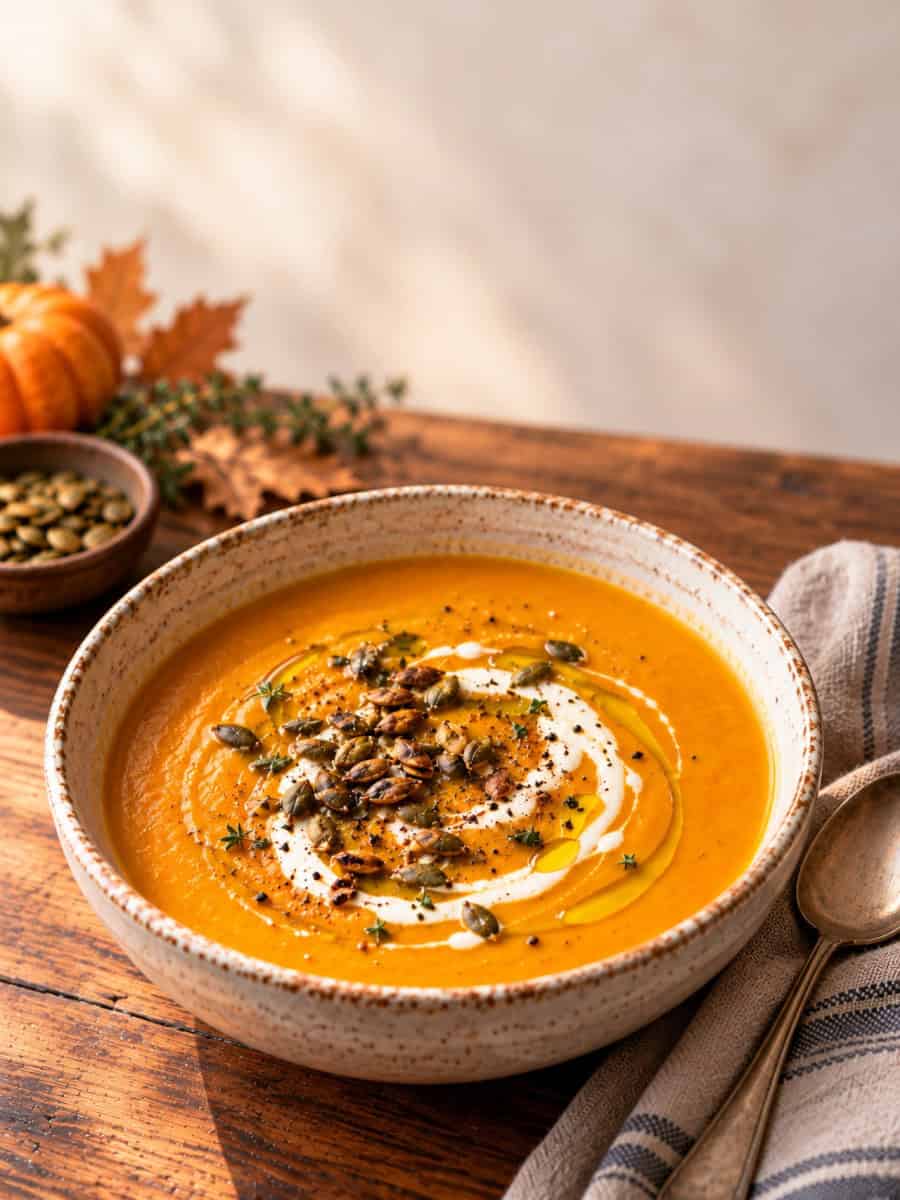
Finish Stir in the coconut milk or cream if using, then taste and adjust the salt and pepper. Ladle into bowls and top with a drizzle of olive oil, a scatter of pepitas, or a swirl of extra cream.
Getting a Truly Creamy Texture Without Much Cream
The coconut milk or cream in this recipe is a finishing touch, not the thing doing the heavy lifting and that’s really the trick behind a good creamy butternut squash soup. Roasting the squash first breaks it down so completely that once it’s blended, the texture is already silky on its own.
If you want it fully dairy-free and vegan, leave the cream out entirely and use vegetable broth and coconut milk instead; you genuinely won’t miss it. And if you want it richer for a dinner party, a slightly heavier hand with the cream at the end (rather than more during cooking) keeps that flavor bright instead of muted.
What to Serve With It
This soup is rich enough to be the centerpiece of a light dinner, but it also plays well as a starter or a side. A few pairings that work every time:
- A grilled cheese, for dunking (this is the pairing people come back for)
- Crusty bread, for the same reason
- A simple green salad with a sharp vinaigrette to cut the sweetness
- Roasted chicken or chicken and dumplings, for a heartier fall dinner
Nutritional Information
Per serving. These are estimates and will vary based on the exact broth and dairy option you use.
- Calories: 180
- Protein: 3g
- Fat: 8g
- Carbohydrates: 26g
Top Tips
Roast, don’t boil: It takes about the same amount of hands-on time, and it’s the difference between a soup that tastes deeply flavorful and one that tastes like blended water.
Don’t skip the aromatics: The onion and garlic aren’t just filler they’re what keeps the soup from tasting flat once the squash’s sweetness is the dominant flavor.
Taste before you salt heavily: Broth varies a lot in sodium. Add salt gradually at the end rather than all at once during roasting.
Blend longer than feels necessary: A truly smooth, restaurant-style texture usually needs another 30 60 seconds past when it looks done.
Recipe Variations
Crockpot butternut squash soup: Skip the roasting step and add raw, cubed squash straight to the slow cooker with the broth, onion, garlic, and spices. Cook on low for 6 7 hours or high for 3 4, until the squash is fork-tender, then blend as directed. You lose a little of the caramelized flavor but gain a completely hands-off dinner.
Butternut squash soup with coconut milk: Full-fat coconut milk is the easiest way to make this soup dairy-free and vegan without losing any creaminess. It pairs naturally with warm spices, which makes it the obvious base for the curry variation below.
Curried butternut squash soup: Stir 1 2 teaspoons of curry powder in with the garlic, and use coconut milk rather than cream. The warmth of the curry plays beautifully against the sweetness of the squash.
Butternut squash soup with apple: Add one peeled, chopped apple to the pot along with the broth for a softer, sweeter background note a nice variation if you want the soup to lean more dessert-adjacent-cozy than savory.
How to Store and Reheat
Refrigerating: Store in an airtight container in the fridge for up to 4 days. It tastes even better the next day, once the flavors have settled.
Freezing: Freezes well for up to 3 months. If you used cream, add it fresh after reheating rather than freezing it in, since dairy can separate when thawed.
Reheating: Warm gently on the stovetop over medium-low heat, stirring occasionally, or in the microwave in short bursts. Add a splash of broth if it’s thickened too much in the fridge.
Looking for more cozy fall soups? This one’s part of our full fall comfort dinners lineup. If you loved the roasting technique here, you’ll want to try our pumpkin soup next same method, different squash. For more soup options once the weather turns, check out our Panera chicken and wild rice soup copycat and Olive Garden minestrone soup copycat.
Butternut Pumpkin Soup
Equipment
- Large baking sheet
- Large pot
- Immersion blender
- Sharp knife
Ingredients
- 1 large butternut squash about 3 lbs, halved and seeded
- 2 tablespoons olive oil divided
- 1 yellow onion chopped
- 2 cloves garlic minced
- 4 cups vegetable or chicken broth
- 1/2 cup coconut milk or heavy cream optional
- 1/2 teaspoon ground nutmeg
- 1/2 teaspoon ground cinnamon
- Salt and pepper to taste
- Olive oil pepitas, or a swirl of cream, for serving
Instructions
- Roast the Squash Preheat your oven to 400°F. Brush the cut sides of the squash with 1 tablespoon olive oil, season with salt and pepper, and place cut-side-down on a lined baking sheet. Roast for 40 45 minutes, until a fork slides in easily. Let it cool slightly, then scoop the flesh into a bowl.
- Sauté the Aromatics While the squash roasts, warm the remaining olive oil in a large pot over medium heat. Add the onion and cook for 5 6 minutes, until soft and translucent. Stir in the garlic and cook for another 30 seconds, just until fragrant.
- Simmer Add the roasted squash, broth, nutmeg, and cinnamon to the pot. Bring to a simmer and let it cook for 10 minutes so the flavors come together.
- Blend Use an immersion blender to purée the soup right in the pot, or work in batches with a countertop blender. Blend until completely smooth.
- Finish Stir in the coconut milk or cream if using, then taste and adjust the salt and pepper. Ladle into bowls and top with a drizzle of olive oil, a scatter of pepitas, or a swirl of extra cream.

Michelle
Hi, I’m Michelle, the founder, owner, author, and editor of OvenSpot. My passion for one-pot cooking commenced when I was working to prepare cafeteria lunches for school students. I am now on a mission to assist you in choosing the cooking pot or appliance you will use daily. As well as in-depth information to assist you in using and caring for your cookware and appliances. Along with the yummy recipes I use at home.
Questions? Reach out to Michelle at [email protected]