
The Different Types of Steak: A Complete Guide to Every Cut Worth Knowing
There’s something quietly satisfying about standing at a butcher counter and actually knowing what you’re looking at. Not just pointing at the prettiest piece and hoping for the best but understanding why one cut is better for a weeknight pan-sear and another was made for a long, slow weekend grill.
Whether you’re cooking for someone special, feeding a hungry family on a Saturday night, or just finally ready to stop guessing, this guide to the different types of steak will change the way you shop, cook, and eat beef.
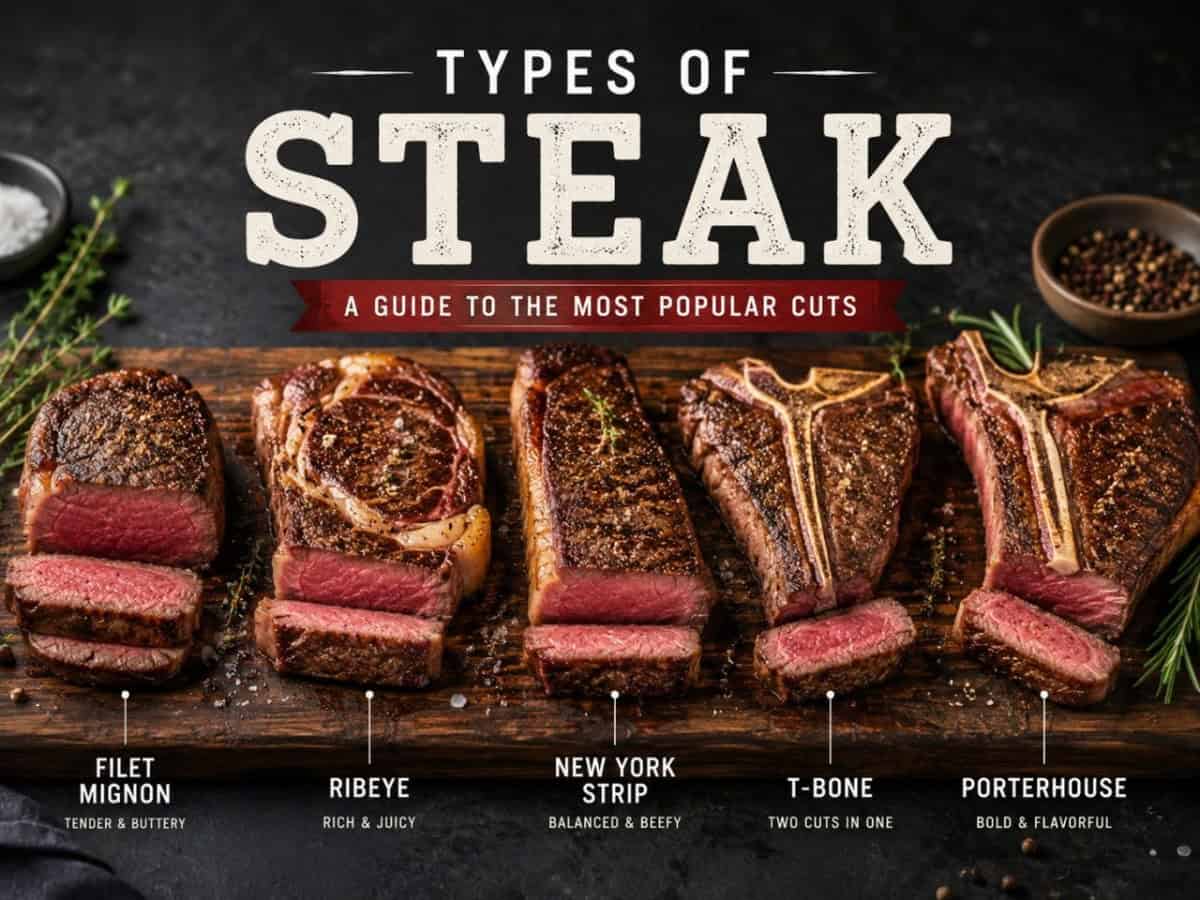
Why the Cut Matters More Than You Think
Steaks come from different muscles on the cow, and that one simple fact explains almost everything. A muscle that works hard like those in the shoulder or legs builds more connective tissue and develops deeper, beefier flavor. It’s tougher and often needs a marinade or a slower cook. A muscle that barely moves like the tenderloin stays soft and buttery, but it has a milder flavor profile.
Understanding this isn’t just trivia. It’s the key to buying the right steak for the right moment, cooking it the right way, and getting the most out of every cut whether you’re working with a generous budget or finding incredible value in less-celebrated pieces.
The 10 Most Popular Steak Cuts, Explained
1. Filet Mignon: The Most Tender Steak
From: Tenderloin
If tenderness is what you’re after, filet mignon is at the top of the list. Cut from the tenderloin a long, narrow muscle that runs along the spine and does almost no work it has a soft, almost buttery texture with a mild, clean flavor. It’s lean, elegant, and the choice cut for a special occasion dinner when you want every bite to feel like a treat.
Best cooked: Pan-seared in a cast iron skillet with butter, garlic, and a sprig of thyme.
2. Ribeye: Rich, Juicy, Full of Flavor
From: Rib section
Ask most home cooks which steak is their favorite and, more often than not, the ribeye wins. It’s cut from the rib section and known for its generous marbling those fine white threads of fat running through the meat which melt during cooking and create an intensely rich, juicy bite. It has bold beef flavor and a beautiful char when cooked over high heat.
Best cooked: Grilled over high heat or pan-seared. Either method works wonderfully.
3. New York Strip: Bold Flavor with the Perfect Chew
From: Short loin
The New York strip sits in a sweet spot between the filet and the ribeye. It has a firmer texture than the filet but a cleaner, leaner profile than the ribeye, with a good balance of tenderness and satisfying chew. It’s a reliable, classic steak the kind you’ll find at every great steakhouse for good reason.
Best cooked: Grilled or pan-seared, ideally finished with a simple herb butter.
4. T-Bone: Two Steaks in One
From: Short loin
The T-bone is exactly what the name suggests: a T-shaped bone with two different cuts on either side. On one side, the tenderloin. On the other, the strip. You get the best of both worlds in a single cut the tenderness of the filet and the bold flavor of the strip. It’s a satisfying, visually impressive steak that feels special without being fussy.
Best cooked: Grilled over direct heat.
5. Porterhouse: The Hearty, Full-Flavored Showstopper
From: Short loin
Think of the porterhouse as the T-bone’s bigger sibling. It comes from further back along the short loin, which means the tenderloin portion is noticeably larger. It’s a hearty, full-flavored cut the kind that anchors a proper steak dinner and genuinely feeds two people if you’re serving sides.
Best cooked: Grilled low and slow, then finished over high heat for a beautiful crust.
6. Sirloin: Lean, Flavorful, Great Value
From: Sirloin
Sirloin is one of those cuts that doesn’t get the attention it deserves. It’s lean, genuinely flavorful, and among the best value steak cuts you’ll find at any butcher. It has a slightly firmer texture than the premium cuts above, but with proper seasoning and the right cook, it delivers a completely satisfying steak dinner without the premium price tag.
Best cooked: Grilled or pan-seared, always sliced against the grain.
7. Flat Iron: The Hidden Gem of Everyday Cooking
From: Chuck (shoulder)
Cut from the chuck, the flat iron is one of the most underrated steak cuts worth knowing. It has a rich, beefy flavor, impressive tenderness for a shoulder cut, and beautiful marbling that keeps it moist. It’s also wonderfully suited to marinades, which makes it a brilliant weeknight option when you plan ahead.
Best cooked: Grilled or pan-seared. Marinate for a few hours if you have the time.
8. Skirt Steak: Intense Flavor, Made for the Grill
From: Plate
Skirt steak has one of the most intense, deeply beefy flavors of any cut on this list. It’s long and thin with a slightly chewy texture but that chew comes with serious flavor payoff. The most important thing to know: always slice it against the grain. That simple step transforms an otherwise tough bite into something tender and satisfying.
Best cooked: Grilled hot and fast. A marinade does wonders here too.
9. Hanger Steak: Buttery, Beefy, and Often Overlooked
From: Chuck (diaphragm area)
The hanger steak is often called “the butcher’s secret” the cut that those in the know kept for themselves. It has a buttery tenderness and an exceptionally rich, beefy flavor that rivals cuts twice its price. It’s not always easy to find, but when you do, grab it.
Best cooked: Grilled or pan-seared, always served medium rare for best results.
10. Tri-Tip: Juicy, Versatile, and Beautifully Textured
*From: Sirloin (bottom)
Tri-tip is a triangular cut from the bottom sirloin, popular on the West Coast and deeply underappreciated everywhere else. It has a firm, juicy texture, good marbling, and a flavor that sits somewhere between sirloin and ribeye. It’s one of the most versatile beef steak cuts — equally good on the grill or slow-roasted in the oven.
Best cooked: Grilled or oven-roasted, then rested well before slicing.
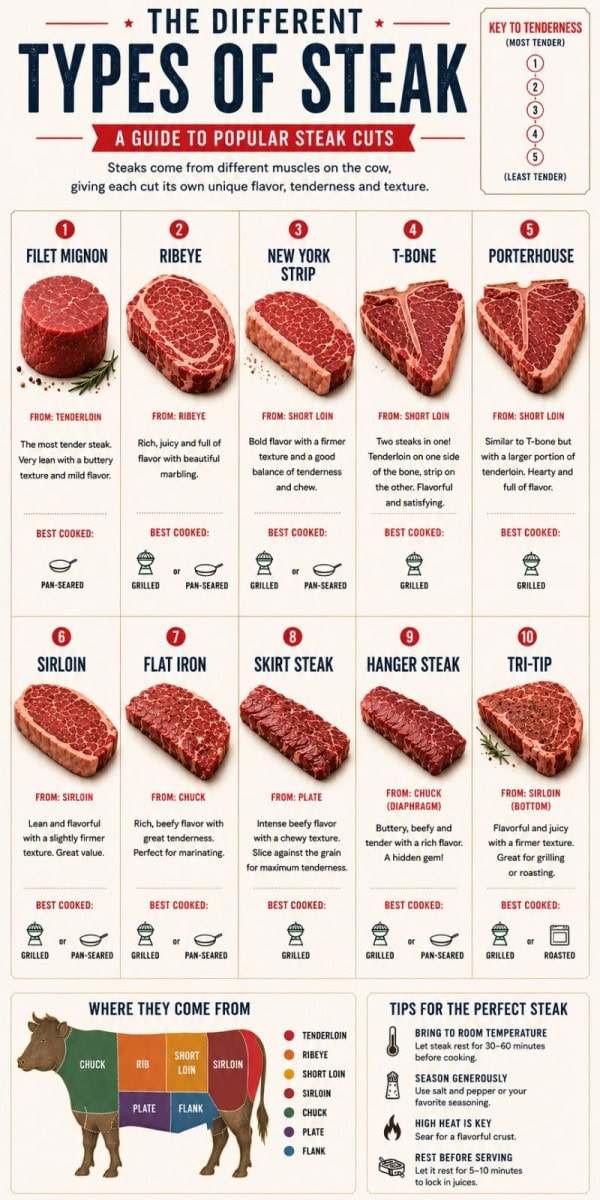
A Few Tips for Cooking Any Steak Well
No matter which cut you’re working with, these fundamentals hold true every time.
Bring it to room temperature first. Pull your steak out of the fridge 30 to 60 minutes before cooking. Cold meat straight onto a hot pan is the single most common reason steaks cook unevenly. A few minutes on the counter makes a real difference.
Season generously. Salt is not the enemy it’s the ingredient. A good layer of salt (and pepper, if you like) applied before cooking seasons the meat deeply and helps form that beautiful crust we’re all chasing.
Use high heat. Whether you’re grilling or pan-searing, a hot surface creates the Maillard reaction the caramelization that gives steak its deep brown crust and complex flavor. Don’t rush to medium; let it rip.
Rest before cutting. This is the step most people skip, and it’s the step that matters most. Let your steak rest for 5 to 10 minutes after cooking. The juices redistribute, the temperature evens out, and every bite stays tender and moist instead of running all over the cutting board.
Which Steak Cut Is Right for You?
Here’s a simple way to think about it:
- For the most tender bite: Filet mignon or flat iron
- For the richest, most flavorful experience: Ribeye or hanger steak
- For great value without sacrificing flavor: Sirloin or skirt steak
- For grilling season showstoppers: T-bone, porterhouse, or tri-tip
- For weeknight marinades: Flat iron or skirt steak
The beautiful thing about learning the different steak cuts is that it opens up the whole counter. Suddenly, you’re not just buying the same cut out of habit you’re choosing intentionally, cooking confidently, and getting genuinely better meals on the table as a result.
Save this guide and pin the infographic above so you always have it on hand next time you’re at the butcher or planning your next steak dinner.

Michelle
Hi, I’m Michelle, the founder, owner, author, and editor of OvenSpot. My passion for one-pot cooking commenced when I was working to prepare cafeteria lunches for school students. I am now on a mission to assist you in choosing the cooking pot or appliance you will use daily. As well as in-depth information to assist you in using and caring for your cookware and appliances. Along with the yummy recipes I use at home.
Questions? Reach out to Michelle at [email protected]